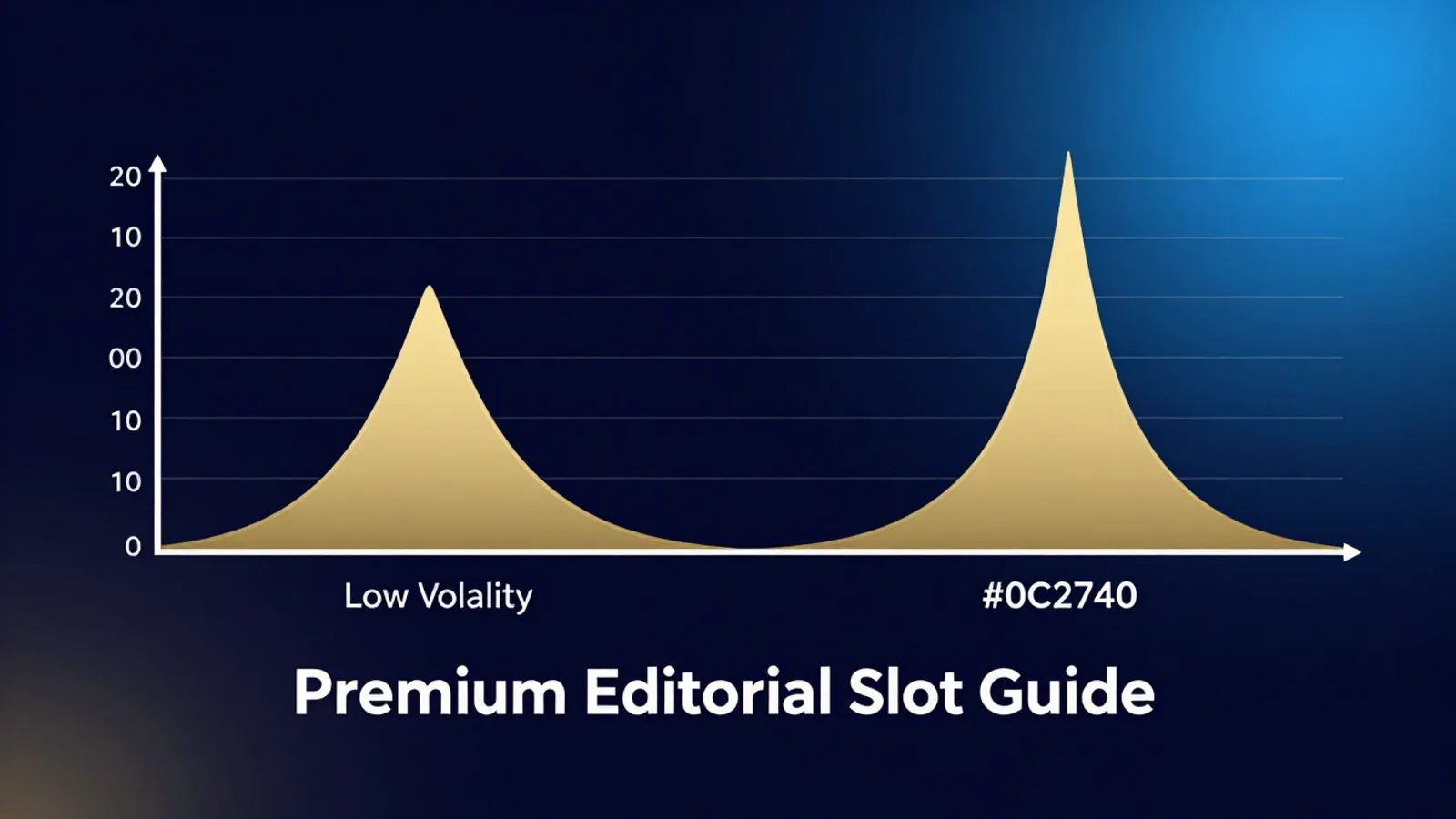
High volatility slots generally produce wins less often, but those wins can be bigger when they land. Low volatility slots tend to do the opposite, paying out more frequently but usually in smaller amounts. Neither one is automatically the "better" choice. It really comes down to the kind of slot experience you actually enjoy.
MRQ Slots makes this easier by labelling volatility on its games, so you're not left guessing. As MrQ describes it, volatility influences the frequency of successful spins as well as the size of possible winnings, since the slots may vary from Low to High. Once you figure out the meaning of this scale, it becomes much easier for you to choose a slot that matches your style.
What Does Volatility Mean in Slots?
Slot volatility is basically a description of how a game pays out over time. It tells you two things: roughly how often you can expect a winning spin, and roughly how big those wins tend to be relative to your stake.
What volatility doesn't do is predict your next spin. Every spin still runs on RNG (random number generation), meaning each one is independent of the last. Volatility is a long-run pattern, built from how the game is mathematically designed, not a signal for what's about to happen right now.
Here's a quick breakdown of how the three main levels generally compare:
| Volatility | Typical Win Frequency | Typical Payout Size | Experience |
|---|---|---|---|
| Low | More frequent | Smaller | Steadier |
| Medium | Balanced | Moderate | Middle ground |
| High | Less frequent | Potentially larger | More variable |
Actually, MrQ goes one step further than the standard three-tier system. It uses five levels: Low, Low-Med, Medium, Med-High and High. Now, that extra granularity gives a more accurate picture than just putting everything into "low, medium, or high."
What Are High Volatility Slots?
High volatility slots are built around bigger, less frequent wins. You might go through a fair few spins without much happening, and then hit a feature or bonus round that pays out significantly more than a typical low volatility win would. Bonus rounds and max-win potential are often a major part of what makes these games tick.
For more context on what sets these games apart, see What Makes MrQ Slots Different? .
The important thing to understand is that high volatility does not mean increased chances of winning. This only indicates that the distribution of rewards is different, with the emphasis on big rather than frequent wins.
What Does Playing a High Volatility Slot Feel Like?
This usually implies extended periods of inactivity, after which a player receives a big reward, accounting for a substantial part of the overall winnings. The balance changes considerably, dropping for some time before the trigger returns the money. It's a different rhythm to play through compared to a steadier game, and it's not for everyone.
Examples of High Volatility Slots at MrQ
Book of Dead is a well known example currently labelled as High volatility on MrQ. There are other High and Med-High titles available too, and since volatility ratings can be updated, it's worth checking the current game information on MrQ directly rather than relying purely on examples from an older list.
What Are Low Volatility Slots?
Low volatility slots work the other way around. There are plenty of winning combinations, but each one is associated with low payments. This results in smoother gameplay since there are fewer lengthy breaks between wins than you would have in case of high volatility slot machines.
However, steady doesn't mean guaranteed. Volatility is just an inherent characteristic that can be observed over a period of time.
What Does Playing a Low Volatility Slot Feel Like?
Sessions on a low volatility slot tend to involve smaller, more frequent results rather than waiting around for one big feature to carry the whole thing. There's less reliance on an occasional large win to make the session feel worthwhile. This tends to suit players who'd rather see regular activity on their balance than sit through long gaps hoping for a big payout.
Examples of Low Volatility Slots at MrQ
The popular example for that would be Starburst, which at present is classified by MrQ as being a Low volatility game. Like any other individual game, it would be good to check the current rating on the game page itself, since classifications can shift over time.
High vs Low Volatility Slots: Key Differences
| Factor | High Volatility | Low Volatility |
|---|---|---|
| Winning frequency | Generally lower | Generally higher |
| Typical win size | Potentially larger | Usually smaller |
| Balance movement | More variable | Usually steadier |
| Large payout potential | Often higher | Often lower |
| Gameplay style | Peaks and gaps | More frequent activity |
| Better option? | Depends on preference | Depends on preference |
Neither side of this table represents a smarter way to play. It's really about which pattern of wins fits how you like to spend a session.
What About Medium Volatility Slots?
It's easy to talk about this topic like it's a straight choice between two extremes, but medium volatility slots exist for exactly this reason. They're designed to land somewhere in the middle, offering a reasonable balance between how often you win and how big those wins tend to be.
MrQ's five-tier system reflects this with its Low-Med and Med-High categories too, giving a bit more nuance than a simple three-way split. If neither "frequent small wins" nor "rare big wins" sounds quite right, medium volatility (or one of the levels either side of it) is worth a closer look.
Volatility vs RTP: What Is the Difference?
These two terms get mixed up constantly, so it's worth being clear about the difference.
| Volatility | RTP | |
|---|---|---|
| Measures | Pattern/frequency and size of wins | Long-term theoretical return |
| Displayed as | Low to High / score | Percentage |
| Predicts next spin? | No | No |
| Main use | Understand game behaviour | Compare theoretical return |
A high RTP doesn't necessarily mean frequent wins, and volatility doesn't tell you the percentage returned over time. They're measuring two completely different things, and MrQ makes this same distinction in its own game guides.
If you want to dig further into RTP specifically, our guide to the Highest RTP Slots covers that in more detail.
Which Slot Volatility Might Suit Your Playing Style?
You Prefer More Frequent, Smaller Wins
Low volatility is likely to match this style better, with steadier activity across a session rather than long pauses between results.
You Prefer A Balance Between Frequency And Payout Size
Medium volatility sits in the middle ground. It gives a bit of both without leaning heavily towards a particular side.
You Prefer Less Frequent Wins With Higher Potential Payouts
High volatility is built around this pattern, with bigger potential payouts balanced against longer gaps between wins.
Whichever profile sounds like you, remember that volatility describes how a game behaves over many spins. It can't tell you what your next spin, or even your next session, will actually do.
How to Check a Slot's Volatility at MrQ
Checking this on MrQ is straightforward. Open the game you're interested in and look at its volatility level provided in the game details. There will be a different value of the RTP provided next to the volatility level, allowing you to see them side by side. The other things to consider are the paytable and bonuses rather than selecting slots based solely on their highest payout amount.
Does Bet Size Change Slot Volatility?
This is a common question, and the short answer is no, not usually. Changing your stake changes how much you're risking per spin, but it doesn't transform the underlying volatility a game was built with.
There is an exception worth knowing about. Some games include adjustable volatility mechanics built directly into the game itself. MrQ notes that certain Wazdan titles, for example, let players actively select Low, Medium, or High volatility within the game settings. This is a feature of specific titles though, not something that applies across slots generally.
High Or Low Volatility: The Bottom Line
Neither category guarantees a better outcome. Volatility is about how payouts are distributed across a game's design, not a way to predict or improve your results. The most sensible approach is picking a style of gameplay you actually enjoy, rather than searching for a "winning" category that doesn't really exist. And whichever slot you land on, it is quite beneficial to check both RTP and volatility before you start playing, as they tell you two different, useful things.
If you're curious to see these differences in action, it's worth browsing the Best MrQ Slots or checking out MrQ Jackpot Slots for titles across different volatility levels.
High vs Low Volatility Slots: Which Suits Your Style? FAQ
High volatility slots tend to pay out less often but with potentially larger wins, while low volatility slots pay out more frequently in smaller amounts.
Not inherently. They offer a different pattern of wins, not better odds or guaranteed higher returns.
Generally, yes, low volatility slots tend to produce winning spins more frequently, though individual wins are usually smaller.
No. Volatility and RTP measure different things, and a slot's volatility level doesn't determine its RTP percentage.
Yes. A game can combine a high theoretical return with an unpredictable, high volatility payout pattern. The two figures are independent of each other.
Open the specific game on MrQ and check the game information section, where volatility is displayed alongside RTP and other game details.